










Auditor's verdict
Watchdog warns Holyrood over short-term fixes

Plugging gaps in the budget with short-term fixes will not tackle continuing pressure on Scotland’s public services, a spending watchdog has warned.
Audit Scotland said one-off decisions, like diverting money allocated to climate measures to meet public sector pay increases, showed a lack of strategic planning.
The body said “fundamental change” was needed to keep services affordable.
Public finance minister Ivan McKee said “significant work” on reforming public spending had been done since the period covered in the report.
Audit Scotland pointed out that the use of £460m in one-off ScotWind revenues to help pay for pay awards could not be repeated in future.
That Scotwind money cannot be used again but Audit Scotland stated the government “does not know how” it will fund the higher spending required in the future.
The watchdog pointed out that £160m from the UK government to pay for the winter fuel payment had been diverted as part of the budget savings, and would need to be paid back at some point.
Audit Scotland detailed £933m of savings outlined to balance the 2024/25 budget in its Fiscal Sustainability and Reform in Scotland report.
Auditor general Stephen Boyle said: “People do not fully understand the medium-term risks public services are facing because of a lack of transparency from the Scottish government.
“The reality is that we need a fundamental change to how public money is spent to ensure services can meet demand and remain affordable beyond the short-term.

“To turn that into action on the ground, the Scottish government must set out a clearer vision of what its plans for reform will achieve, including delivery milestones and the likely impact of reform on services and people.”
The report from Audit Scotland comes a few weeks after Holyrood’s finance committee admitted it was “deeply concerned” about how the SNP is spending the nation’s money.
In August, the Scottish Fiscal Commission said government decisions, such as former First Minister Humza Yousaf’s council tax freeze, social security reforms and a series of public pay rises above the 3% guideline set by government, had contributed to the growing financial pressure.
Public finance minister Ivan McKee said ministers would take on board the report’s recommendations.
He said: “While this report covers a period in time from March to June this year, there has been significant work on reform since, including capturing data on spending by public bodies.”
McKee also said the SNP had taken action to “improve the overall sustainability” of public finances.
He added: “We remain committed to doing all we can to ensure the public finances remain on a sustainable trajectory.
“Through decisions we have made on income tax policy, we expect to raise an additional £1.5bn in 2024-25, compared to if we had matched UK government policy.”
Scottish Labour finance spokesman, Michael Marra, said the SNP was at risk of “squandering” the block grant settlement from Westminster.
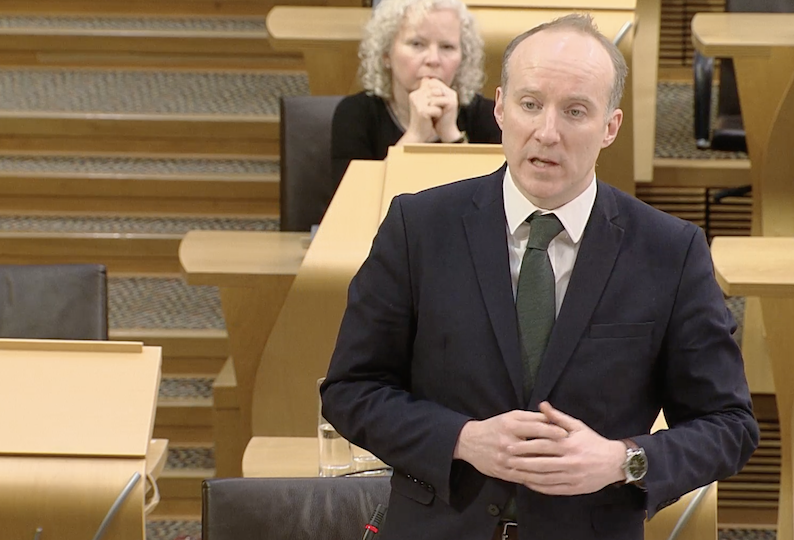
“The SNP has created a blackhole at the heart of public finances but has refused to be honest about how it happened or what it means,” he said.
Scottish Conservative finance spokesman, Craig Hoy, accused the SNP of “gross financial incompetence”.
He said: “It is astonishing that the SNP simply do not even know how much funding will be required to support future reforms.”
Scottish Liberal Democrat leader, Alex Cole-Hamilton, accused the government of making “one expensive blunder after another. Ministers don’t have any plan for public services.
“This report emphasises we need a step change to how public money is spent.”
Recent Posts

Burnham heads to Scotland with devolution in mind
Andy Burnham is expected to visit Scotland at the end of this week in whatRead More
