










Scottish Budget
Almost all extra Holyrood funding ‘already spent’

Generous pay awards to public sector staff mean the Scottish government will be left with as little as £100 million of extra funding for next year, according to new analysis.
Chancellor Rachel Reeves topped up this year’s Scottish funds by £1.5bn and by £3.4bn for the year beginning in April.
But the Fraser of Allander Institute at the University of Strathclyde says almost all the new cash has already been allocated.
The additional Treasury funding comprises a sum for capital projects and £2.8 billion for day-to-day resource spending, with public sector pay rises accounting for half that sum.
It means Finance Secretary Shona Robison has little room for manoeuvre when she presents her Budget for 2025-26 next week.
Together with other commitments such as £200m for topping up national insurance payments and yesterday’s decision to reinstate the winter fuel payment, it means most of the money has already spent.
The fact that public sector workers are, on average, paid more in Scotland, will mean that the challenges are even more acute, given the country’s much larger public sector, accounting for about 22% of the workforce compared with 17% south of the border.
The decisions on this, and on areas like social security, have put additional pressure on the Scottish Government’s budget, says the institute.

The institutes’s director Mairi Spowage said the government may again have to introduce emergency spending measures.
“The Scottish government’s decisions and some of the headwinds that they face mean that the additional funding for this year is already largely committed, and the funding for 2025-26 is under more pressure than it would initially appear” she said. Further wage pressures will leave “very little wiggle room.”
The institute also warned businesses that that replicating the 40% business rates relief in England would cost Scottish ministers about £73 million more than is received through the Barnett funding.
Due to a different system, and because retail, hospitality and leisure makes up a larger share of the tax base, the cost might be as high as £220m compared with a budget of £147m.
Dr João Sousa, deputy director, said: “Health Spending, all other pay, social security and grants to local government make up £7 in every £8 the Scottish Government spends. This seriously limits their room for manoeuvre in changing the overall shape of the Budget.
“Figuring out the funding position for 2025-26 has been much more challenging. The lack of a Medium Term Financial Strategy this year has made calculating this near impossible, but we have set out the various pressures that the budget is likely to be under.”
Shadow cabinet secretary for finance and local government Craig Hoy said: “This is a stark warning that the SNP government’s bloated public sector pay bill is likely to add to the financial pressures imposed by their upcoming budget.
“It’s utterly damning that the report concludes that the SNP’s lack of transparency and failure to provide a Medium Term Financial Strategy makes proper calculations almost impossible. And it’s terrifying that their recklessness over public sector pay means that this budget might have to be revised before the year is out.
“It’s the SNP’s own misguided decisions that have limited their options, but it’s Scottish households and businesses that are paying the heavy price for their incompetence.”
Retailers issue warning after footfall slumps
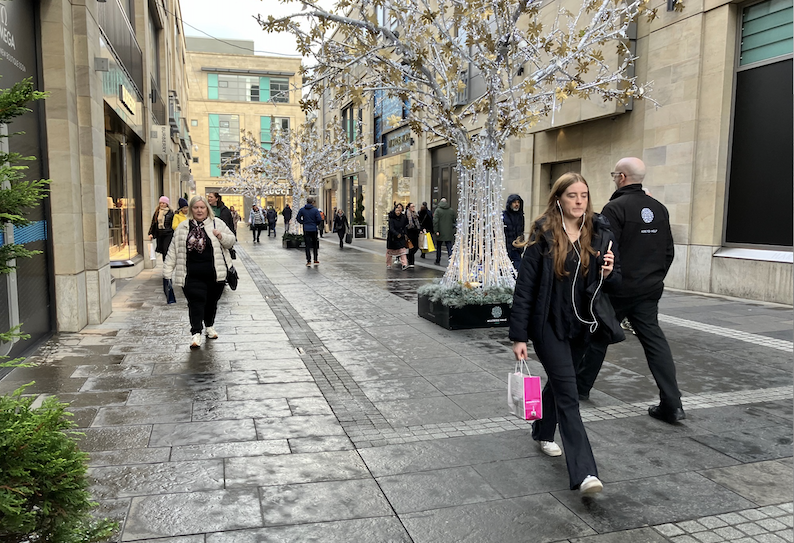
Retail industry leaders have demanded an “unambiguously pro-business Scottish Budget” after a sharp slump in shopper footfall in Scotland.
Overall footfall fell by 6.8% in the four weeks to 23 November, compared with the same period last year.
This was conspicuously worse than the average UK-wide decline of 4.5%. Edinburgh registered an average fall of 5.6% and Glasgow a 9.4% decline.
However, the Scottish Retail Consortium noted that the later timing of Black Friday this year means it did not fall into the latest figures, but was included in last year’s comparable, exacerbating the year-on-year decline.
SRC director David Lonsdale described the figures as “unnerving” as November usually signals a pick up in traffic.
He admitted that plummeting temperatures and amber weather alerts saw Scots stay away from the shops.
However, he said the steep decline in Scottish footfall was more marked than in most other parts of the UK.
“Many stores rely on a solid festive period to tide them over the leaner winter months that follow.
“What this does do is reinforce the need for an unambiguously pro-business Scottish Budget next week, one which injects much needed confidence into the economy and which avoids piling extra costs onto retailers still reeling from the Chancellor’s hike to national insurance.”
Recent Posts

Burnham heads to Scotland with devolution in mind
Andy Burnham is expected to visit Scotland at the end of this week in whatRead More
