










Edinburgh scheme
Housing development site to be biodiverse
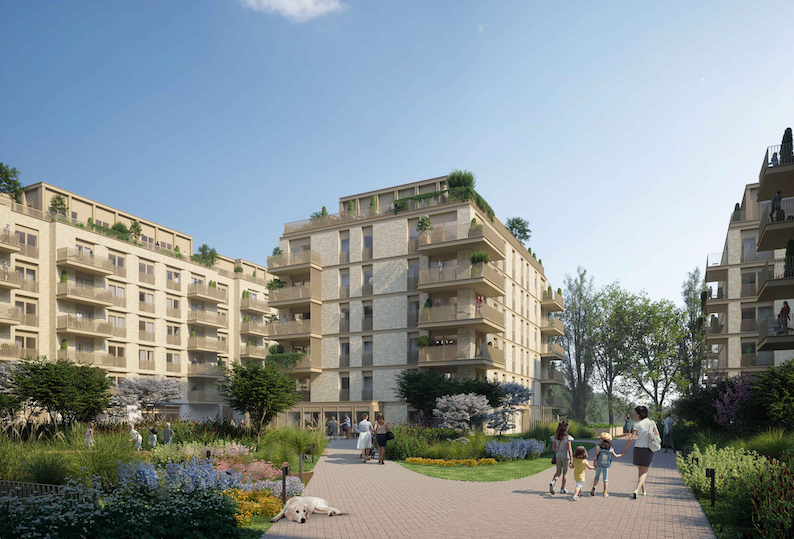
One of Edinburgh’s largest development projects will put put a focus on biodiversity and green spaces.
Regeneration specialist Artisan Real Estate, together with fund manager REInvest Asset Management SA, is redeveloping the former Deutsche Bank House at Ferry Road, Edinburgh, near the Crewe Toll roundabout.
The office and data-processing centre was formerly the Scottish base for State Street Bank until 2018.
Rebranded as ‘525 Park View’ the new scheme will provide 256 homes, 25% of which will be for affordable housing. Flexible commercial space facing on to Ferry Road also provides the potential for cafes, shops and shared workspaces.
More than two thirds of the development area will be made up of green spaces – including a large central communal garden as well as biodiverse green roofs and a ‘wetland’ area which enhances local ecology whilst contributing to the wider sustainable urban drainage system.
Smart technology such as individual air source heat pumps for each home also means no fossil fuels will be used, underlining the developers’ commitment to sustainable low carbon development and delivering low energy costs for occupiers.

The planning submission follows a comprehensive 14-month consultation programme, with the developers and Edinburgh-based 7N Architects working closely with local community and wider city interests to ensure maximum benefit for both the local area and Edinburgh as a whole.
Artisan Real Estate’s regional director for Scotland, David Westwater, said: “This is a hugely exciting opportunity to breathe new life into an underused building, whilst ensuring its long-term future by bringing a new sustainable community to an accessible city centre location
“Following the consultation feedback, we have worked hard to make this development not just the right fit for the site but also an integral part of the wider city centre area.
“We have reduced the height of the buildings from nine to seven storeys and ensured the overall architectural design and materials respect local and historical contexts.”
Recent Posts
Poundland collapses leaving 11,000 jobs at risk
More than 11,000 jobs across the UK are at risk after high street retailer PoundlandRead More
