Week Ahead
Shell and HSBC update on exposure to Iran war

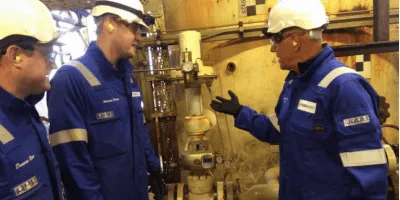
Earnings forecasts for Shell have jumped nearly 50% since the start of the war in Iran, in line with the rise in oil prices, say AJ Bell analysts.
Despite flagging lower gas production following damage to its Qatar LNG facility, Shell noted its oil trading results were ‘significantly higher’ than the prior quarter, reflecting Shell’s integrated business model.
Investors will be looking for a strategic update following the company’s recent $16 billion acquisition of Canada’s gas producer ARC Resources.
Derren Nathan, head of equity research at Hargreaves Lansdown, says: “Like the rest of the sector, Shell’s fortunes remain linked to movements in commodity prices.
“However, strong cash generation, a relatively robust balance sheet, and a well-run trading division mean we think it’s relatively well placed to cope with some volatility in the oil price.
“The Iran War has driven up oil prices, and with it, Shell’s valuation. We think prices could remain elevated for some time, which supports recent increases to this year’s profit forecasts.
“The valuation looks about right to us. Further out estimates don’t look too aggressive, leaving some room on the table for upside if Shell executes well and commodity prices remain favourable.
“However, today’s geopolitics are highly unpredictable, and investors should be prepared to tolerate relatively high levels of risk.”
UPDATE 5 MAY: Europe’s largest lender HSBC has reported a slight slip in first-quarter pre-tax profit to $9.37 billion (2025: $9.5bn), missing analysts’ estimates on the back of higher expected credit losses and other impairment charges.
Revenue rose 6%, year on year, exceeding estimates, on stronger wealth fee and other income. Shares in Hong Kong drop 3.7%.
Expected credit losses of $1.3bn were $400 million higher compared with the same period a year earlier, partly due to increased uncertainty and a worsening economic outlook due to the conflict in the Middle East.
The bank, however, said that it was on track to delivering $1.5 billion in annualised cost reduction by the end of June 2026. “Through the privatisation of Hang Seng Bank, we expect to realise $0.5bn in pre-tax revenue and cost synergies across both our brands in Hong Kong by the end of 2028.”
The bank’s net interest income rose 8% in the first quarter, year on year, to $8.9bn as did operating expenses, also up 8%, owed to the impacts of inflation, forex, higher planned spending and performance-related pay.
The lender highlighted risks due to the Middle East conflict, including higher oil prices, sharper inflation, a significant slowdown in GDP, warning that if those factors came into play there could be a “mid-to-high single digit percentage” negative impact on its profit before tax.
The bank maintained its dividend for the first quarter at 10 cents per share.
DIARY
Tuesday 5 May
- First-quarter results from HSBC
Wednesday 6 May
- First-quarter results from Flutter Entertainment
- UK Composite PMI
- European Producer Prices
Thursday 7 May
- First-quarter results from Shell
Friday 8 May
- First-quarter results from IAG
- Halifax House Price index
- US Non-Farm Payrolls
Recent Posts

Trump unveils diesel supply agreement with Putin
Donald Trump cranked up the tension in the Ukraine war by reaching agreement with Russian PresidentRead More