Markets
Trump ‘wants world to treat us fairly’ as Wall St wobbles

Updated 11 April
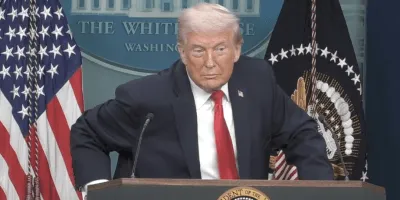
Donald Trump hailed the success of his tariffs policy as world leaders jostled for favour in the US president’s new trading order.
Mr Trump declared his announcement “as the biggest day” in the history of the markets and insisted he was merely trying “to get the world to treat us fairly”.
However, uncertainty returned with Asia’s markets falling overnight, with Japan’s Nikkei down 4%, and investors switching to gold in search of stable assets. Gold gained another 3.2% to $3,155.20 an ounce.
On Wall Street the broadly-based S&P 500 was down 3.5%, its worst day in a week, while the technology-heavy Nasdaq had dropped 4.3%, down 6.9% since 2 April.
London’s leading index, the FTSE 100, opened more than 6% higher on the back of the president’s 90-day pause and 10% baseline, before closing 233.77 points (3.04%) higher at 7,913.25.
Mr Trump’s baseline 10% provides 75 countries with a starting point for talks, while the new 145% tariff on China is a response to the world’s second biggest economy hiking its levy on US imports to 84%.
“Everybody wants to come and make a deal”, said Mr Trump who also welcomed a fall in US inflation fell faster than expected to 2.4%. This was down from 2.8% in the previous month and against expectations of 2.6%.
However, Isaac Stell, Investment Manager at Wealth Club said the fall in inflation relates to the month before the tariff announcement and said the Fed will be focused on the impact of the levies, particularly on China.
“When the figures for April arrive, inflation is likely to have headed north once again following the introduction of tariffs on China at over 100%,” said Mr Stell.
“As a huge importer of Chinese goods, the US consumer may shortly start to feel the pinch with additional tariffs on cars and metals also likely to start to dripping through. However, amidst the economic turmoil, good news is welcome even if only temporary.”
The tariffs on the UK remain unchanged at 10% and, crucially, are now the same as the EU, even though the UK government resisted the latter’s threatened retaliatory action. Prime Minister Sir Keir Starmer is still hopeful of a deal, but there are no indications as yet to suggest that his decision not to provoke Mr Trump will result in preferential treatment.
Recent Posts
Trump unveils diesel supply agreement with Putin
Donald Trump cranked up the tension in the Ukraine war by reaching agreement with Russian PresidentRead More