Market report
Renewables hit by Trump’s green energy reversal

A number of renewables companies saw their shares fall fell, in particular Ørsted, after President Trump announced that the US roll back on the green agenda.
The world’s largest offshore wind developer unveiled fresh writedowns on its US business, sending its shares down more than 17% as the market opened on Tuesday.
Ørsted blamed interest rates and supply chain challenges, for announcing impairments of $1.7bn, but investors noted that it included “market uncertainties”, affecting the value of its seabed leases.
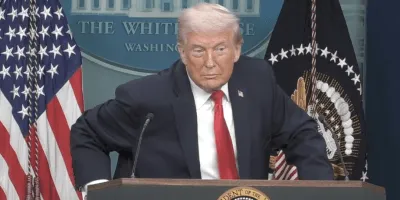
After being sworn in, the 47th president said tariffs on Mexico and Canada could come in as soon as 1 February.
“It’s that kind of whiplash investors need to get used to and today the dollar rebounded and US markets edged higher,” said AJ Bell analysts.
“There’s a great deal of uncertainty about some of Trump’s plans, particularly when it comes to tariffs, but it wasn’t a surprise that European automakers were among the day’s losers.
“A number of renewables companies also fell, in particular Orsted, after the announcement that the US will withdraw from the Paris Climate Agreement.”
The FTSE 100 hung onto positive momentum, rising 0.33% to finish at 8,548.29 points, and with mixed jobs data not denting market expectation of a February rate cut the FTSE 250 was also on form, ending the day up 0.53%.
The unemployment rate for September to November stood at 4.4%, in line with forecasts, while vacancies fell by 24,000 to 812,000 in the three months to December.
In currency markets, sterling was last up 0.05% on the dollar to trade at $1.2334, while it slipped 0.05% against the euro, changing hands at €1.1828.
In other corporate news, Ana Botín, executive chair of Spain-based bank Santander said it remains committed to the UK, describing it as one of its “core markets”.
She said: “We love the UK, it is a core market, and will remain a core market for Santander for the future.”

On London’s equity markets, financial stocks exposed to the car finance mis-selling case were in focus, with Lloyds Banking Group climbing 3.99% and Close Brothers Group surging 21.57%.
The upward moves came on the back of reports that Chancellor Rachel Reeves may shield car-loan providers from potential multi billion-pound payouts linked to an alleged mis-selling case.
The Treasury said: “We want to see a fair and proportionate judgment that ensures compensation to consumers that is proportionate to the losses they have suffered, and allows the motor finance sector to continue playing its role in supporting millions of motorists to own vehicles.”
Elsewhere, Abrdn advanced 4.45% after reporting a return to net inflows in the fourth quarter, signalling a positive turnaround for the investment firm.
Pubs group Marston’s said it had enjoyed “particularly strong” trading over Christmas. The Wolverhampton-based pub operator cheered a “solid” quarter, with like-for-like sales up 11.1% over the key trading weeks from 22 December to 4 January. Like-for-like sales over Christmas lifted Marston’s sales by 2% in the 16 weeks to 18 January.
Netflix reported annual operating income exceeded $10 billion for the first time in the company’s history and added 18.9 million subscribers in its holiday quarter, beating expectations. Live sporting events and the return of its popular South Korean series “Squid Game” attracted a record number of new customers.
This current quarter will also mark the last time Netflix reports subscriber additions, as the company shifts its emphasis to other performance metrics including revenue and profit, a change analysts attribute to slowing subscriber growth.
Recent Posts
Trump unveils diesel supply agreement with Putin
Donald Trump cranked up the tension in the Ukraine war by reaching agreement with Russian PresidentRead More