










Budget warning
Top rate income tax hikes ‘may have cut revenue’

Increases in Scotland’s top rate of income tax may actually have reduced government revenue, according to a top research body.
The Institute for Fiscal Studies (IFS) says this could be due to individuals finding ways to avoid paying the higher rate, though the actual factors behind the potential impact of the higher tax remains “subject to a high degree of uncertainty”.
However, the evidence currently available suggests the government should put any further planned increases on hold, says the IFS.
Direct evidence on the impact of the bigger increases in income tax seen over the last two years is much more limited due to lags before tax records are submitted and processed, says the IFS.
It adds that the Scottish Government and HMRC should update their analysis when these data become available and explore what can be learned from more timely sources of information.
Ahead of the Scottish budget on 4 December, David Phillips, an associate director at IFS and head of devolved and local government finance, said: “The scale of divergence in income tax bills between Scotland and the rest of the UK for high income earners has increased significantly over the last two years.
“Someone on £125,000 a year, for example, would now pay around £5,200 more in income tax in Scotland than an otherwise-equivalent high earner living south of the border. That is up from £2,400 just two years ago.

“Research from Scotland, the wider UK and other countries points to such differences affecting taxpayers’ behaviour – how much they earn, migrate, and avoid or evade taxes.
“These responses are most significant for the highest-income individuals who, while few in number, contribute a large share of overall tax revenue.
“As a result, increases in the top rate of tax are unlikely to raise much – with evidence from the first of Scotland’s reforms in 2018–19 suggesting they may even reduce revenue.
“There is still considerable uncertainty about this though. The bigger changes to income tax seen over the last two years – which have yet to be analysed – will provide a useful opportunity to learn more about taxpayers’ behaviour.
“In the meantime, the evidence currently available suggests that if the aim is to raise revenue, the Scottish Government should at least pause any plans for further increases in Scotland’s tax rates on higher incomes.”
Scottish Labour Finance spokesperson Michael Marra said “This damning analysis lays bare how financially and economically illiterate this SNP government is.
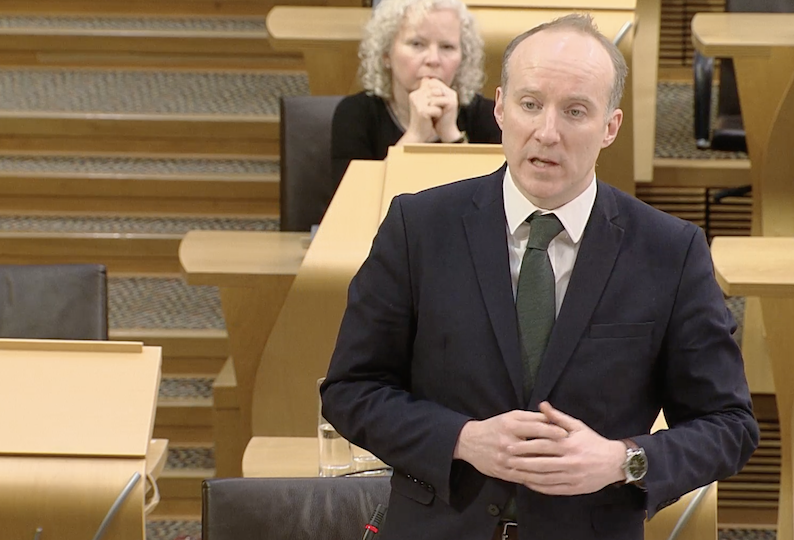
“For too long the SNP has tried to use income tax hikes as a sticking plaster to cover for low growth and government waste, but it’s just not working.
“Working people cannot keep picking up the bill for the SNP’s failure – the government must not repeat its mistakes in this year’s budget.”
Scottish Liberal Democrat economy spokesperson Willie Rennie said: “When these tax changes were introduced I noted that the government would need to take careful note of the impact on behaviour.
“I have heard from medics and dentists who feel unfairly penalised by this legislation. Meanwhile Scotland’s business community has warned that higher taxes risked investment heading to Carlisle and Newcastle instead.
“This IFS analysis suggests that these fears may have been well founded.
“Each individual change the Scottish Government makes may seem logical on its own but the cumulative impact of rising taxes and increasing red tape is strangling economic growth and hurting the public finances.
“The forthcoming budget must give no fresh reasons for highly skilled professionals to head for the exits.”
Recent Posts

Burnham heads to Scotland with devolution in mind
Andy Burnham is expected to visit Scotland at the end of this week in whatRead More
